Showing posts with label Devotional. Show all posts

Sunday, August 03, 2025

A Monumental Gamble


The above is a photograph I took of an article in the Spring 2025 edition of a church magazine called Idea. The article is by Richard Gamble who is the driving force behind the building of the Eternal Wall of Answered Prayer pictured above. I first took cognizance of The Wall in this post:

Norwich Churches and Belief Communities: The Eternal Wall of Answered prayer

The Wall (yet to be built) is a truly monumental sized mobius strip filled with the accounts of answered prayer. In my original October  2020 post I reported the Guardian Newspaper telling us that the wall was.... 

An enormous Christian monument, more than twice the size of the Angel of the North, is to be built on the outskirts of Birmingham, fulfilling a vision its instigator says came from God.

The Eternal Wall of Answered Prayer will be constructed using a million bricks, each representing a prayer from a member of the public and its outcome. The aim is to “encourage and inspire people going through the storms of life”, said Richard Gamble, the project’s chief executive and a former chaplain of Leicester City football club.

The monument, which has been granted planning permission with work to begin next year, has three goals: to “preserve the Christian heritage of the nation”; encourage prayer; and “proclaim Jesus for the country”.

Well,  nearly five years later the wall hasn't even been started. In the article above Richard Gamble admits that the project is facing two problems a) Getting funding, although that, according to Gamble, is easier than b) finding those 1 million answered prayers of which Gamble says that so far he only has 40,000. He goes on to say why he thinks support for the project is patchy. But in spite of that the article ends by telling us that construction of the wall is to begin this year.

Wednesday, October 19, 2022

Autism and The Church

This  should help people with Asperger's syndrome feel better about themselves!

There was an interesting article on the Premier Christianity web site about autism written by someone who is probably at the Asperger's end of the autism spectrum. Here's the link:

 'I want to love God with all my mind, but as an autistic Christian, my brain works differently to yours' | Magazine Features | Premier Christianity

This subject interests me because I've long suspected that my personality type is skewed toward the mild end of the autistic spectrum. Reading about people such as Gary Newman, Chris Packham, Paul Dirac and the like I detect many points of contact with my own experience. I took an online test and it returned a score that plonked me in the lower reaches of the spectrum. Not a surprise really: The social world never really attracted me and seemed too complex & difficult to get involved with in a big way. In any case the noise of my own thoughts drowned out the noise of the social world around me. I was well known for not listening to what people had to say and as a result I was backward at school (that's still a weakness of mine!). I disliked the hubbub of the school playground and seldom joined in. I was especially averse to the raucous fairground environment. 

A communication dysfunction seems to be a core symptom of autism. It's easy to understand that if this dysfunction is severe, it completely stultifies development. On the other hand a mild dose of autism can be a positive advantage (see article above); a measure of disconnection from one's social environment helps facilitate internal focus on problem solving, favours independence of thought and helps avoid being dragged along by mindless group think.  Also, the tendency of autistics to seek out calm, ordered environments with predictable habitual rhythms helps free up the precious resource of thinking time so that it can concentrate on pondering the meaning of the big picture.  

*** 

The highly gregarious environments of churches are not a natural environment for those on the autism spectrum.  A conversion myth that Christianity makes you super-gregarious and good with people is abroad in many Christain circles. In fact in my experience the quality of one's faith may be judged on one's ability to be outgoing and sociable: When I first converted to Christianity, I got the distinct impression that the sign of a good conversion was that an otherwise introverted dispassionate person suddenly becomes full of passion, very sociable and shows the "Love of Christ" by hobnobbing with lots of people. In fact some of the pundits of the gnostically inclined charismatic culture (I wouldn't want to say "all", however) judge the presence of the "infilling of the spirit" in such superficial terms. They misinterpret an overt existential expression of faith, a fixation with spontaneity  and prolific verbal communications (especially speaking in tongues & prophecy) as the obligatory signs of the "power of the spirit".  They also see the human thought world through a contrived "head knowledge vs heart knowledge" dualism.  These doctrines are oppressive & excluding. See here where I endured six weeks of gnostic bigotry as I followed & analyzed a gnostic sermon series. 

I suppose it's no surprise that my involvement with church has been nondescript: I've lacked the requisite rapport and synergy, especially with those Christians who have bought into existential conversion myths. Being a science aficionado has meant that my attitude to some Christian subcultures has been considerably jaundiced by the presence of anti-science proto-conspiracy theorism which in some quarters has morphed into the full-blown conspiracy theorism of the far-right (e.g. such as QAnon and support for dictatorial & authoritarian forms of government). The latter has just about taken the biscuit, although in the UK this isn't nearly as bad as it is in the US. 

***

I published a link to the Premier article on a church FB page. Not a great response mind as you might expect from someone lacking the social connection to be a pundit of status in church circles. But in any case, for me the search for truth must always have priority over social linkage and social status. Creative problem solving is its own reward. 

I accompanied my link to the Premier article with the notes below:

1. The article suggests that the 1% figure for autism is a lower limit and as diagnostic services improve a larger figure will emerge. But as with any multifaceted condition the boundaries demarking autism are fuzzy.

2. It’s often been remarked that the human social skill is the most advanced and complex processing ability we possess; after all, the social world which we endeavor to grapple with daily is the most complex object of all creation. No surprise then that stresses should arise with such a demanding task.

3. Thinking about the Christian environments I’ve had contact with I’m sure there is a correlation between a church culture and the personalities it selects and vice versa (it’s a “feedback” effect). The social scene selects or deselects certain personality types leading to a local bias. e.g. in a population where there is roughly a 50-50 male to female mix overall, churches, last time I looked, return roughly a 4 to 6 mix in favour of females.

4. It is likely that those on the autism spectrum would find quieter regular services with smaller populations more mentally manageable. It would help if people became more effete with the idea that people are not all as equally gifted to cope with the demands of gregariousness.

5. One of the problems churches face in modern times is that community fragmentation has fragmented human contact time over large numbers of people. But building individual relationships requires above all the precious resource of human contact time not fragmented over large populations.   


Relevant link:

'My autism made me an artist but I wanted a family' - BBC News


Sunday, January 24, 2021

Return of the Killer Pews


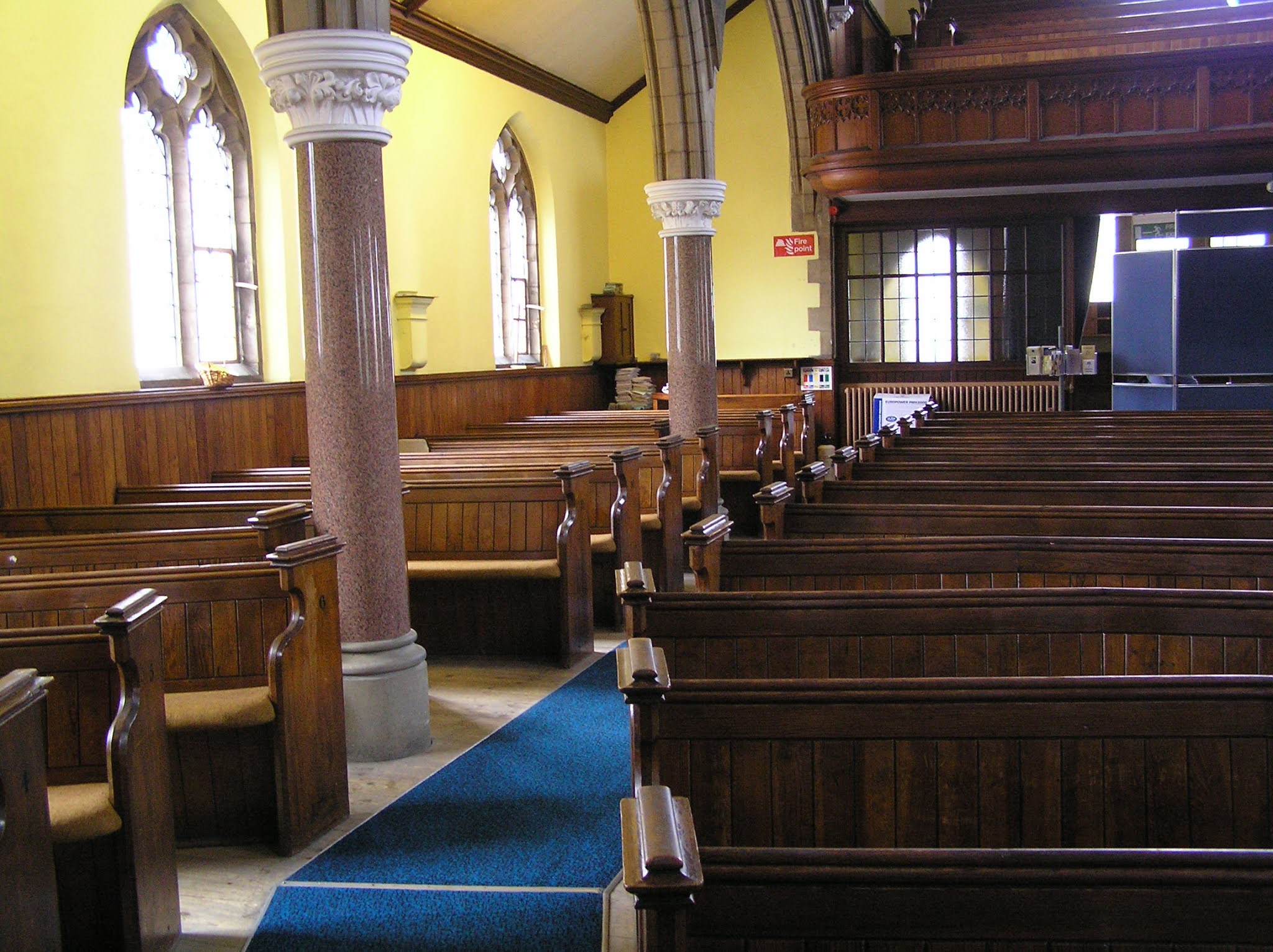
These pews were made for sitting and not the Charismatic Dub Step!

In 1995 I wrote a short essay entitled "Killer Pews". It was a response to a pattern of behaviour I had seen frequently in church life (and continue to see), a pattern where we find some Christians agitating for a spiritual revolution that supercharges what they regard as the rather humdrum, mediocre & unempowered work of a target church. The proposed remedy is that individuals must proactively seek an experience of "the Baptism of the Spirit". Given that many people in the church may already lay claim to having had the Baptism of the Spirit, sometimes more generic and vague terms such as the touch of God, an encounter with God or an infilling may be used. However, when one analyses what is actually being promoted one finds that it has less to do with spiritual experience per se than it has in trying to cast spiritual renewal into a quasi-gnostic philosophical mold by asserting a sharp distinction between the initiates and non-initiates of  some kind of inner spiritual light. As is so often the case when the target church fails to respond to the revivalist challenge it is then put down to "resisting the Spirit".

I must caution at this point that I am in no way presuming to put an unqualified denial on anyone's personal Christian experience or any epiphany they may have which takes them to a new level (which they may rightly or wrongly call the Baptism of the Spirit), anymore than I would expect them to cast doubt on my own very proprietary experience; rather my criticisms are about how such experiences are being interpreted and used to promote a philosophy which perceives Christian life in dualisms: "head vs heart", "intellect vs intuition",  "reason vs faith", initiates vs non-initiates and the like.  

***

I'm currently following an online service where the challenge of moving onto a whole different plane of super-spirituality & blessing is being promulgated by the speakers of the latest sermon series. At the time of writing Killer Pews in 1995 I was seeing, and had seen, Christian experience being cast into a very similar dualist mold of initiates vs non-initiates. This philosophy can lead to a lot of hard feeling not least because the logic of its aficionados has maneuvered them into such a position that they can only see criticism as a form of resistance to the very Spirit of God. They therefore can do little but consider any challenge to their views as a very grave matter indeed. 

I have of course written a lot more on this subject since 1995, some of which can be found in the links below. Possibly at the end of this latest episode I may say something about this particular foray into "gnostic" renewal. But let me hazard what I think will be the likely outcome of this latest sermon series: By and large the preachers will hear positive noises from the people they are preaching too, but because these preachers find difficulty taking onboard the variety, broadness and depths of the human personalities they are dealing with and moreover, the variety, broadness and depths of God's work, the outcome will fall short of the new dawn they are looking for. We might end up with some very disappointed promoters who will feel as though they have been punching at very soft foam rubber. It's happened before.

http://viewsnewsandpews.blogspot.com/search/label/Dualism

http://viewsnewsandpews.blogspot.com/search/label/Fideism

http://viewsnewsandpews.blogspot.com/search/label/Mythos%20vs%20Logos

http://norwichcentralbaptistchurch.blogspot.com/search/label/Logos%20vs%20Pneuma

http://norwichcentralbaptistchurch.blogspot.com/search/label/mythos%20vs%20logos


ADDENDUM 13/02/21

More details about the underlying philosophy of the sermon series commented on above can be found here:

http://quantumnonlinearity.blogspot.com/2021/02/head-vs-heart-intellect-vs-feeling.html


ADDENDUM 

20/04/21: I post here my detailed comments on the online sermon series I refer to above: 

https://drive.google.com/file/d/1OWIjP8FdaVrRYbhBJL0M9bVR3gM2kOGd/view

Sunday, October 11, 2020

The Eternal Wall of Answered prayer

Unanswered prayer is conspicuous by its absence!

The Eternal Wall of Answered Prayer

I was recently in discussion with someone about the building of the above huge 51 metre high monument costing £9.3m and called "The Eternal Wall of Answered Prayer". This is what the Guardian says of it: 

An enormous Christian monument, more than twice the size of the Angel of the North, is to be built on the outskirts of Birmingham, fulfilling a vision its instigator says came from God.

The Eternal Wall of Answered Prayer will be constructed using a million bricks, each representing a prayer from a member of the public and its outcome. The aim is to “encourage and inspire people going through the storms of life”, said Richard Gamble, the project’s chief executive and a former chaplain of Leicester City football club.

The monument, which has been granted planning permission with work to begin next year, has three goals: to “preserve the Christian heritage of the nation”; encourage prayer; and “proclaim Jesus for the country”.

More information can be found here: 

https://www.bbc.co.uk/news/uk-england-coventry-warwickshire-54123035

My friend, although a Christian, was clearly troubled by the thought that the money to build this monument could be more usefully spent elsewhere. (The money, according to the Guardian, is being donated by Lord Edmiston, a billionaire businessman, Conservative party donor and evangelical Christian). Although I was quite fascinated by the idea of a monumental Mobius strip my first reaction was surprise at the go ahead by North Warwickshire borough council’s planning committee who unanimously endorsed the scheme; after all, the UK appears to be a relatively secularised country, so how well does this huge Christian monument express British civic values? Below I present part of our conversation (I've called my friend "Bert"):

***

ME: At first sight it sounds a good idea to me. Love the symbolism of a giant mobius strip. Perhaps the country is not as secularised as I thought (Covid 19 anything to do with it?). However, weighing the incommensurables of the benefits of heritage (e.g. the moon landings) against more consumable benefits is not a straightforward comparison.

A good post though Bert: Got me thinking about balancing the monumental, which often serves community, kudos and status quo values, group identification and even hubris (e.g. Avebury, Silbury, Cathedrals etc...), against the more basic needs of just living satisfactorily. But I'm still puzzled and gob smacked that this project has got the go-ahead (unless it's a provocative troll article?). What's happening out there?

BERT:  I’m actually shocked it went ahead. Shouldn’t we give our money to the poor? Think of amount of meals that could feed those in poverty?

ME: Well yes, dire need should trump flights of monumental vanity, but when you've got a big economic surplus, human beings start to go monumental as we see in history. I assume your shock is about misplaced resources. My grasp of the economics here isn't great enough to contradict that, but I'm also shocked that what is basically a huge celebration of theism should get the go-ahead in the secularised UK. What in God's name is going on?

BERT:  Reminds me of Super/mega churches

ME: Not too keen on those myself! Shades of Nuremberg where you become one small cell in a frighteningly large organism run amok. Perhaps the funds are better spent on food banks and even covid19 research. But trying to put the balancing act here aside, as a monument I quite like the mobius strip. Although somebody did raise the question of "What about all those unanswered prayers?" Like all monuments it makes you reflect!

***


So, what about all those unanswered prayers then? How big a mobius strip would that require? Are there even enough bricks? Well, a few days later, independently and in an entirely different Christian connection, another Christian friend (whom I shall call "Josh") opened up a short email correspondence with me. The following is based on the first two email shots of that correspondence:


JOSH: I had a thought I wanted to run by you. It’s to do with prayer and when we request things – a bit of healing, a repair job, a decision going our way, a job interview, etc – it’s clear to me that although all our good prayers are answered by God at a general level in terms of our Christian progression, in terms of prayer requests for day to day things, the pattern of hits and misses often appears to me to be no more prominent in favour of hits than a random coin toss pattern.

What are your thoughts on this from a mathematician’s perspective?


ME: I think you may be talking about confirmation bias here? That is, is the concept of answered prayer just a myth which arises out of a natural human confirmation bias?

A few days ago I was discussing The Eternal Wall of Answered Prayer with someone else. I don't think I'm the first to remark: "What about all those unanswered prayers?" So the question is: Do the answered vs unanswered statistics give us a result that is statistically significant in favour of "answered"? Trouble is, stats doesn't work here.

The question of answered prayer is reminiscent of the statistical research into telepathy & precognition: Telepathy and precognition guesses which yield simple and clear cut "yes" or "no" answers can be mathematically checked for statistical significance but when the message received is composed of highly complex pictures & relationships, judgements about whether telepathy and precognition work are much more difficult to evaluate. With these complex revelations it is very difficult if not impossible to define clear cut and precisely defined mathematical probability spaces of cases (prob of event = cases favourable to the event divided by all cases). Answers to prayer are often more akin to these complex precognition and telepathy models; they are like the intermittent transmissions received by a radio receiver: That receiver may only occasionally splutter into life and deliver a clear cut message for a short while: But just a single event like that is so improbable as a spontaneous random event that you just can't help the feeling that this single remarkable event wouldn't happen by chance! Clear messages very seldom emerge from a sea of random noise.

I'm not a great prayer warrior myself although we do pray briefly for the family every night. I can only make sense of this area using the metaphor of the parent-child relation: The child asks for things and the parent responds either affirmatively or negatively within that relationship and according to the boundless wisdom (and love) of the parent (boundless as far as a young child is concerned!). Given the parent's much wider perspective the child is simply not going to understand why some petitions are answered and others aren't. In fact the parent may say "no" more often than "yes"! But let's remember this: A radio need only crackle into life once or twice on your desert island for you know that someone is out there!

***

Epistemic Note

Our epistemology works best with regular, highly ordered, stable, accessible and relatively simple objects: If there are aspects of reality that don't conform to this pattern then our epistemic endeavors start to struggle; witness sociology, evolutionary psychology, economics, history and UFOs. 

If epistemically speaking we are going to be bowled the curve balls of an erratic and complex reality then don't expect authoritative certainty to emerge and instead differing opinions will have to be tolerated; interpretation of these difficult to evaluate connections will be very (cultural) context dependent. (Meaning = text + context!). Here epistemic humility is advised. It is likely that the subject of answered prayer and the paranormal in general will fall into this category. Prejudiced dogmaticism either way is unjustified; but really, given the polarisation and passion that pervades some of these more debatable epistemic connections I suppose that's just too much to hope! See below for some of my links on the subject of epistemology. 

http://quantumnonlinearity.blogspot.com/2018/04/forget-epistemic-demarcation-problem.html

http://quantumnonlinearity.blogspot.com/2018/03/evolutionary-psychology-under-fire.html

http://quantumnonlinearity.blogspot.co.uk/2014/01/evidence-not-proof.html

http://quantumnonlinearity.blogspot.co.uk/2013/09/yes-its-all-science-larry-but-not-as.html

http://quantumnonlinearity.blogspot.co.uk/2013/08/epistemic-notes.html

http://quantumnonlinearity.blogspot.co.uk/2012/08/its-science-larry-but-not-as-you-know-it.html

http://quantumnonlinearity.blogspot.co.uk/2015/02/evidence-guide-lines-but-not-tram-lines.html


ADDENDUM 7/11/20

An article very relevant to the above material can be found in the September 2020 edition of Christianity magazine. In the article, which is entitled Triumphalism, prayer warrior Pete Greig, initiator & leader of the 24-7 prayer movement talks about..... 

...the embarrassing swagger of my early faith.....Throughout the first year or so of the 24-7 prayer movement we were probably pretty unbearable....[we] genuinely thought we had found the big red switch called 'Revival'.....If everyone would just pray the way we were praying, Jesus would be back by breakfast time on Thursday...I'm ashamed to admit that I was often inconsiderate and uncompassionate towards those who were finding life really tough. 

But then,

Sammy [Greig's wife] got sick. I watched her slip into seizure after seizure, and no matter how much I cried out to God to make them stop - even claiming the scriptures - it simply didn't work.  I went from believing my prayers could save the world to questioning whether they could save my wife. 

Greig's attitude has improved no-end:

I still believe in miracles. I continue to pray for revival. But as C S Lewis said, miracles must almost by definition be rare. The creator is not a cosmic slot machine.... I hope I'm more compassionate these days. I'm certainly more comfortable with the sovereignty of God and the many paradoxes of life.

Greig puts a lot of his initial triumphalism down to his youth. But youth doesn't always explain it.